
Article discussion
Maier E & Dost F. Decomposing cross-channel advertising support of retailer price promotions.
Journal of Retailing 100 (2024) 362–381.
https://doi.org/10.1016/j.retai.2024.05.002
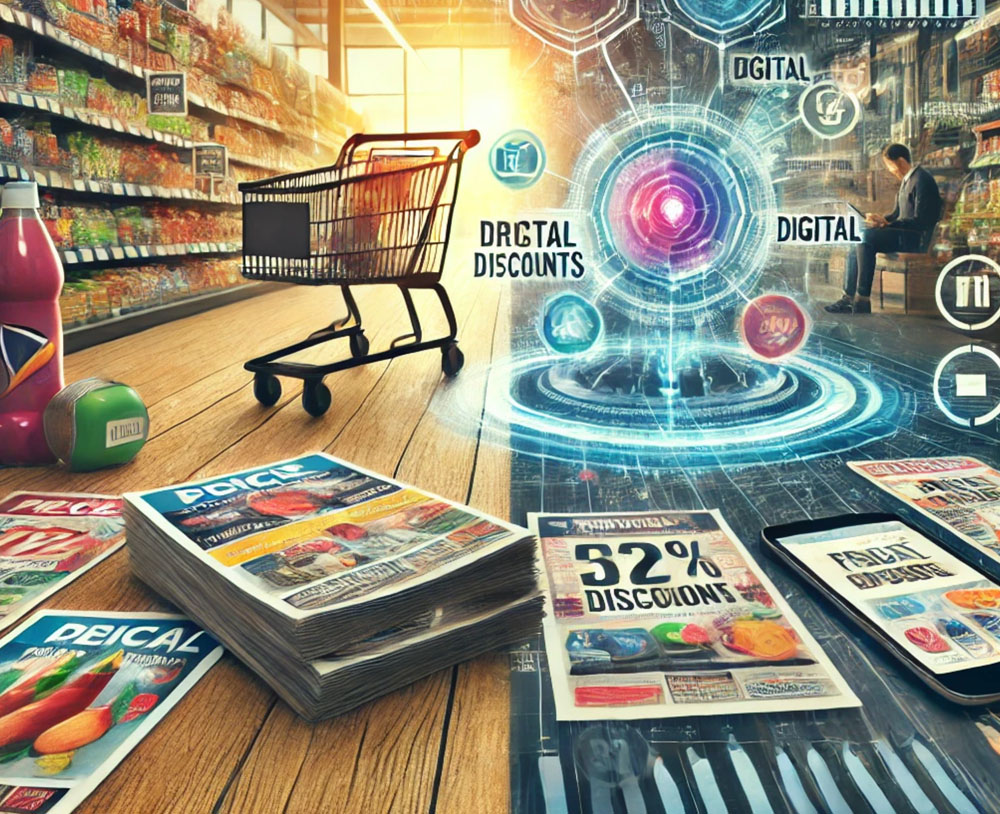
Traditional forms of marketing, such as printed flyers and circulars, are increasingly being replaced by digital advertisements, especially as more retailers strive to modernize their approach or respond to environmental concerns. This transition is part of a larger debate on how cross-channel advertising—both digital and print—supports the effectiveness of price promotions, with implications for retailers and manufacturers alike.
Retailers, who often allocate significant resources to price promotions, have used flyers and circulars to drive consumer traffic for a long time. But with the rise of digital media, retailers are experimenting with online channels to boost the visibility and effectiveness of their price discounts. The key question at the heart of this shift is: Does digital advertising enhance the sales impact of price promotions more than traditional methods? And more critically, how does this affect both the retailer and the brand manufacturer?
Retailers Shifting to Digital Channels
Many retailers, such as Germany’s REWE and France’s Leclerc, have stopped printing physical circulars, favoring digital alternatives. (Maier & Dost,2024) The environmental benefits of such moves are widely recognized, as is the potential for cost savings. However, these shifts are not solely driven by eco-consciousness. Legislative changes in various countries are limiting the use of printed advertisements (ads), pushing retailers to adapt. For instance, opt-in policies for unaddressed mail in the Netherlands reduced the eligible audience for such ads by 50%, forcing retailers to rethink their marketing strategies.
The shift to digital alternatives is also a response to changing consumer behaviors. As consumers spend more time online, digital advertisements are seen as a more effective tool for reaching target audiences. But while the potential of digital advertising is clear, the actual benefits to retailers remain uncertain. Price promotions alone have a well-established impact on sales, but how much of this can be attributed to the advertising support, and how much comes from the discount itself?
The Effectiveness of Digital vs. Print Advertising
A field experiment of Maier & Dost (2024) conducted by a European grocery retailer sheds light on this question. The study compared the impact of price promotions supported by digital advertising, print advertising, and a combination of both. The results provide key insights into the effectiveness of each channel:
- Digital Advertising: The study found that digital ads were highly effective in increasing sales of the promoted product, particularly for popular “consumer-pull” products. For example, digital support resulted in an 85% sales uplift for these products compared to non-promotional periods. However, the benefits to the retailer were less clear. While the promoted product saw a significant sales boost, this often came at the expense of other products within the same category, leading to a net decline in category sales. This suggests that digital ads may encourage brand switching rather than expanding overall category sales.
- Print Advertising: In contrast, print ads had a more modest effect on the promoted product itself but contributed to a small overall increase in category sales. Traditional print advertising seemed to attract a broader audience to the store, with shoppers purchasing not only the promoted items but also other products. This cross-period effect—where shoppers continued to buy products even after the promotion ended—benefited the retailer more than digital ads, which had a limited impact beyond the promotional period.
- Combined Digital and Print Advertising: The most significant impact on overall sales came from a combination of both digital and print advertisements. This approach resulted in a 5% increase in total category sales, offering benefits to both the retailer and the brand manufacturer. By leveraging the strengths of both channels, retailers can draw more shoppers to the store and encourage a broader range of purchases.
Implications for Retailers and Manufacturers
For retailers, the findings offer important guidance on how to configure their advertising strategies. Digital ads are highly effective for driving short-term sales of specific products, particularly for well-known brands. However, their impact on the retailer’s overall performance is limited if they merely shift sales from one product to another. Traditional print ads, while less targeted, can support long-term growth by expanding category sales and encouraging repeat purchases.
For manufacturers, the benefits of digital ads are clear: they drive significant sales increases for promoted products, especially those with strong brand recognition. However, the risk for retailers is that these sales may cannibalize other product sales, reducing the overall benefit to the store.
As manufacturers and retailers negotiate trade promotion budgets, these findings suggest that a balanced approach may be most effective. Manufacturers may push for more digital advertising to support their brands, while retailers should advocate for a mix of digital and print ads to maximize overall sales.
Lost Value from Promotions
One of the central concerns highlighted by this research is the potential loss of value from promotions when they are not properly supported by advertising. If a promotion is only partially supported—say, by digital ads without the corresponding print support—the retailer may miss out on broader sales opportunities. Additionally, if digital ads merely drive brand switching, the retailer’s overall performance may suffer, even if the promoted product sees a temporary spike in sales.
This risk of lost value becomes even more pronounced when promotions target “consumer-pull” products, which are likely to attract significant attention. Without the right balance of advertising channels, the promotion may fail to generate lasting benefits for the retailer.
The Future of Promotional Advertising
As retailers continue to shift their advertising budgets toward digital channels, the challenge will be finding the right mix of media to support their promotions. While digital ads offer significant benefits for driving short-term sales of specific products, traditional forms of advertising still have a role to play in expanding category sales and supporting long-term growth.
Retailers and manufacturers must collaborate closely to ensure that their promotional strategies align. By combining digital and print ads, they can create a more comprehensive approach that benefits both parties. Ultimately, the key to success lies in understanding the different dynamics of each advertising channel and how they interact with price promotions.
In conclusion, this study provides a comprehensive analysis of how different advertising channels—digital, print, and combined—support retailer price promotions. It highlights the benefits and limitations of each channel, offering valuable insights for retailers and manufacturers navigating the changing landscape of cross-channel advertising. As the retail world continues to evolve, finding the right balance between digital and traditional advertising will be essential to maximizing the value of price promotions.